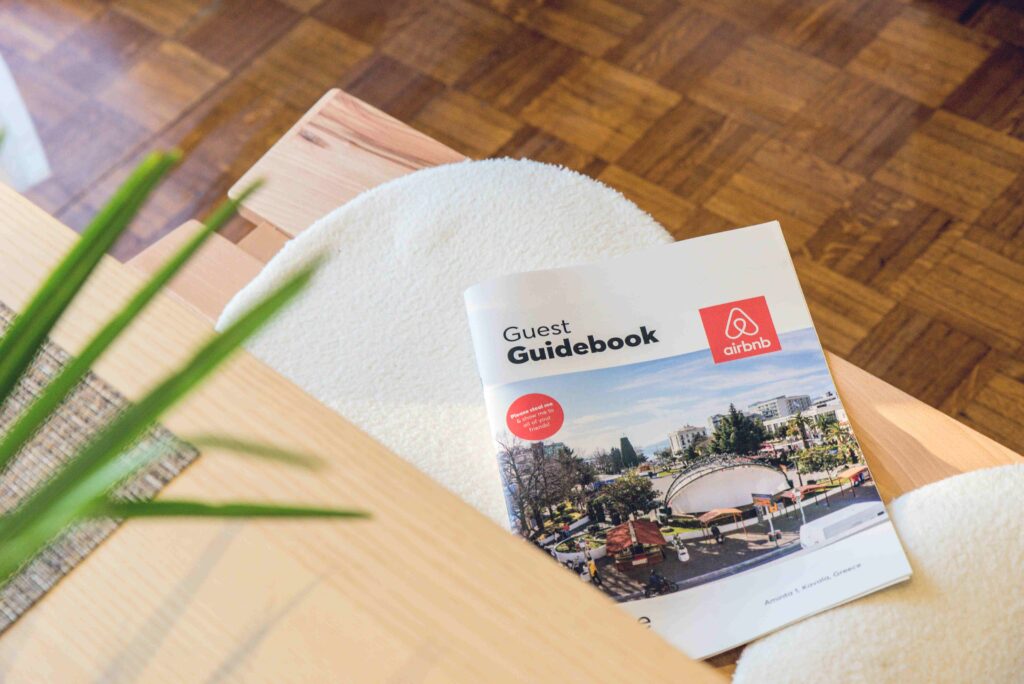
Digital Guidebook for Short-term Rentals: Complete Guide
A digital guidebook is a web-based document where property managers publish all the information a guest needs during their stay: check-in instructions, house rules, appliance guides, WiFi credentials, local recommendations, and emergency contacts. Unlike a printed binder, it updates instantly, works on any device, and reaches guests before they arrive.
This guide covers what a digital guidebook contains, how property managers use it in practice, and the specific tools available to share it without requiring a reservation or login.
What Is a Digital Guidebook?
A digital guidebook is a structured, online document that centralizes property information for guests. It replaces the printed folder on the kitchen counter with a page guests can open from any device, at any time, without downloading an app.
The main difference from traditional guest communication is delivery and access. A printed guide sits in the apartment. A digital guidebook can reach guests before they arrive, gets updated without reprinting, and works whether the guest is at home reviewing the check-in process or standing in front of the property not sure how the key box works.
What a digital guidebook typically contains:
- Check-in and check-out procedures, step by step
- WiFi password and smart TV instructions
- Appliance guides (washing machine, thermostat, coffee maker)
- House rules and noise policies
- Emergency contacts and nearest hospital
- Parking instructions and access codes
- Restaurant recommendations and local transport
- Checkout checklist
Why Property Managers Use Digital Guidebooks
The most direct reason: guests ask the same questions repeatedly. WiFi password, how to operate the dishwasher, where to leave the key at checkout. A digital guidebook answers all of them before the guest sends the message.
Beyond reducing repetitive questions, there are three operational reasons property managers rely on them:
- Standardized information across a portfolio. A manager handling 10 properties cannot personally brief every arriving guest. A digital guidebook ensures the same quality of information reaches every guest, regardless of the property or the season.
- Fewer negative reviews from preventable confusion. A guest who can't figure out the heating in February is unlikely to leave a five-star review. Clear instructions accessible from a phone prevent the kind of friction that shows up in ratings.
- Content that works for multiple channels. The same guidebook shared before arrival via email, displayed via QR code on arrival, or accessed through the guest app after check-in.
How to Share a Digital Guidebook With Guests
There are two main models for sharing guidebook content with guests.
Reservation-linked access
The traditional approach ties guidebook access to a specific reservation. The guest receives a link or access code after booking, and the page shows reservation-specific information (check-in time, host contact, booking details).
This works well for guests who complete the online check-in flow. The limitation: it doesn't cover situations where access is needed before the check-in flow is complete, or where no specific booking exists.
Public property link and QR code
A more flexible approach decouples guidebook access from the reservation entirely. Each property gets a stable public link that anyone can open without logging in and without a booking.
This is how Chekin's Share Guidebooks feature works. From the dashboard, the property manager can:
- Copy a public link specific to that property
- Download a QR code that points to the same link
The page that opens shows only the guidebooks assigned to that property. No reservation data appears: no guest name, no dates, no price, no booking status. The link works at property level, not reservation level.
Practical uses for the public link and QR:
- Print the QR code and frame it inside the apartment. Guests scan it on arrival without needing to have completed check-in.
- Send the link via WhatsApp the day before arrival so guests can review the check-in process before they're standing at the door.
- Include it in a pre-stay email alongside arrival instructions.
- Place it at a physical reception desk for in-person check-in at hotels or serviced apartments.
- Share general property information with prospective guests or direct booking inquiries.
The link is stable. It doesn't expire after checkout or change between reservations. The property manager updates the guidebook content, and the same link always reflects the current version.
What Appears on the Public Guidebook Page
When someone opens the public link, they see a list of the guidebooks published for that property. They can open each one and read its full content.
What never appears on that page:
- Guest name or contact details
- Reservation number or booking reference
- Check-in or check-out dates
- Price or payment information
- Any data tied to a specific booking
If the property has no published guidebooks, the page shows an empty state. The link still works; there's simply no content to display yet.
The system only shows guidebooks marked as visible or published. Drafts don't appear on the public page.
Digital Guidebook Content: What Works and What Doesn't
A digital guidebook is only useful if guests actually read it. A few principles based on how guests interact with this type of content:
Short sections, not long documents. Guests consult a guidebook in specific moments: at the door, looking for the WiFi password, trying to turn on the heating. Each section should be findable in under ten seconds.
Visuals for anything mechanical. Appliance instructions with photos or short videos have significantly lower reread rates than text-only instructions. A thirty-second video of how to operate the apartment's unusual shower tap prevents four WhatsApp messages.
Local recommendations with specificity. "Good restaurants nearby" is less useful than a list of three places within walking distance with one sentence about each. Guests are deciding where to eat, not looking for a list to research.
Updated information. The WiFi password that changed six months ago and hasn't been updated in the guidebook is worse than no WiFi information at all, because the guest will trust it, try it, and then contact the host anyway.
Digital Guidebooks vs. Printed Guides: Practical Comparison
| Digital Guidebook | Printed Guide | |
|---|---|---|
| Update without reprinting | Yes | No |
| Accessible before arrival | Yes | No |
| Works with QR code on-site | Yes | N/A |
| Guest needs phone signal | Yes | No |
| Shareable via WhatsApp or email | Yes | No |
| Works without reservation or login | Yes (with public link) | Yes |
| Cost per update | None | Reprinting cost |
| Multilingual content | Supported | Requires separate versions |
FAQ: Digital Guidebooks for Short-Term Rentals
A digital guidebook is a web-based document where property managers publish all the information guests need during their stay: check-in instructions, house rules, appliance guides, local recommendations, and emergency contacts. Guests access it from any device without downloading an app.
Yes, if the property manager uses a public property link. Chekin's Share Guidebooks feature generates a stable URL per property that anyone can open without logging in or having an active booking. The page shows only the guidebooks assigned to that property, with no reservation data.
From the Chekin dashboard, property managers can download a QR code linked to the property's public guidebook page. Printing this code and placing it inside the apartment lets guests access all published guidebooks by scanning it on arrival, with no login required.
No. A digital guidebook provides property information. The check-in process collects guest identification, manages access, and handles regulatory compliance. Both serve different purposes. A public guidebook link complements the reservation-linked GuestApp without replacing it.
The page shows an empty state. This usually means the property has no published guidebooks, or all existing guidebooks are in draft status. The link works; there's just no content visible yet.
Yes. The public link and QR code are tied to the property, not to a specific guest or booking. They remain stable across all reservations at that property.
How Chekin Manages Digital Guidebooks
Chekin's Digital Guest Guide lets property managers create guidebooks per property and share them through two channels: the reservation-linked GuestApp, which shows personalized stay information after check-in, and the public property link, which works without any reservation at all.
From the Share Guidebooks section in the dashboard, managers access a stable URL and a downloadable QR code for each property. The public page shows only published guidebooks for that property, with no guest or booking data exposed.
This setup covers the full range of sharing scenarios: automated delivery after booking, WhatsApp links sent before arrival, QR codes placed inside apartments, and physical display at reception.
Conclusión
A digital guidebook reduces guest questions, standardizes property information, and reaches guests through multiple channels before and during their stay. The addition of a public property link and QR code removes the last remaining dependency on an active reservation, making guidebook content accessible in any context where a guest needs it.
Property managers who already use digital guidebooks can activate the public link from the Chekin dashboard without additional setup.
Read more about:
How Digital Guidebooks Transform the Guest Experience