For years, the conversation has been framed as a battle: serviced apartments vs hotels. In reality, both models can be highly profitable and complementary in the same portfolio – if you understand their differences and know how to operationalize them.
As a vacation rental or hotel manager, you’re not just choosing a building type. You’re choosing:
- What kind of guests you attract
- How long they stay
- How much service you provide
- And how complex your daily operations will be
In this article we’ll break down the main differences between serviced apartments and hotels, show how to take advantage of each, and explain how tools like Chekin help you manage both models more efficiently while delivering a smoother guest experience.
Serviced apartments vs hotels: key differences for managers
From the guest’s perspective, serviced apartments feel more like a “home”, while hotels feel like a fully serviced experience. From the operator’s side, the implications go much deeper.
Space, layout and “home feel”
- Hotels
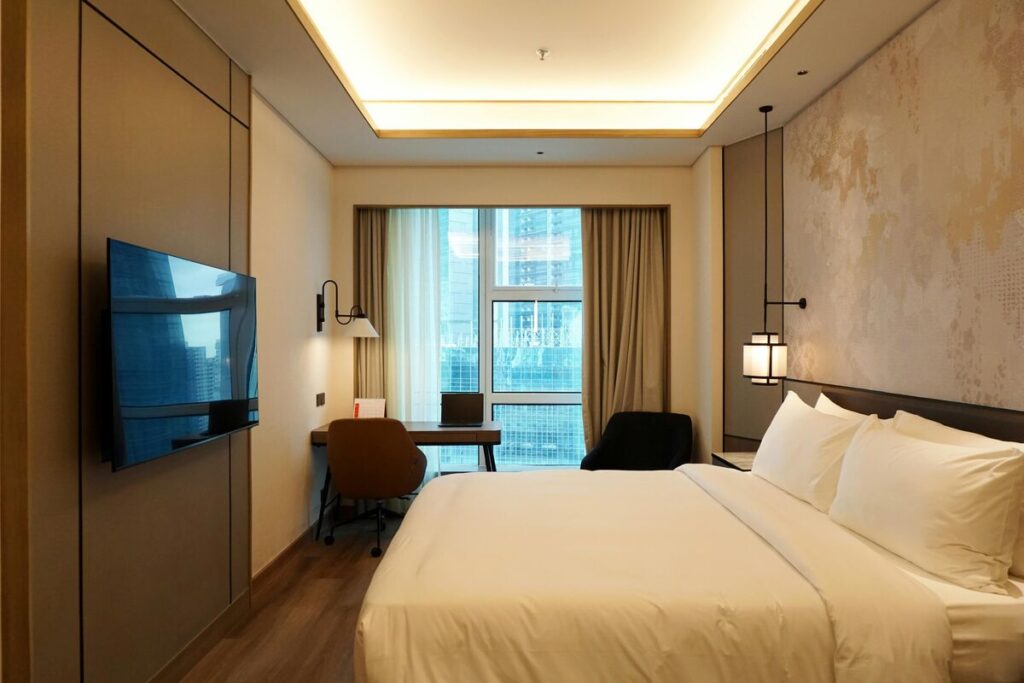
- Usually one bedroom and a bathroom in a relatively compact space.
- Optimised for short stays and quick turnover.
- Serviced apartments
- Often include separate living area, bedroom(s) and a fully equipped kitchen.
- More space for families, remote workers and longer stays.
More space means higher perceived value and the ability to target guests who would otherwise choose a long-stay hotel or even traditional rentals.
Length of stay and guest profile
- Hotels tend to specialise in short stays: city breaks, business trips, events, weekends.
- Serviced apartments shine in medium and long stays: weeks or months, relocations, extended corporate projects, digital nomads and families.
For you as a manager, this impacts:
- Cleaning frequency and cost per booking
- Seasonality and occupancy patterns
- Revenue strategies (daily vs weekly/monthly pricing, corporate contracts, etc.)
Services, privacy and staffing
Hotels are built around high-touch service:
- 24/7 front desk
- Daily housekeeping
- On-site restaurant/bar, room service
- Meeting rooms, spa, gym, concierge
Serviced apartments rely more on self-service and privacy:
- Reduced or scheduled housekeeping (e.g. weekly)
- Limited or remote reception
- Fewer staff on property
- Guests cook, do laundry and manage their own routines
This means different cost structures. Hotels carry heavier fixed staff costs, while serviced apartments depend more on good processes and technology to run lean operations.
Pricing and total cost for the guest
At a nightly rate level, hotels and serviced apartments may look similar. But for the guest:
- In hotels, additional costs stack up quickly: restaurant, laundry, mini-bar, etc.
- In serviced apartments, guests reduce spending by cooking, doing laundry and sharing space across more people.
For longer stays, this “total stay cost” advantage often makes serviced apartments more attractive, especially for corporate and family travel – which can boost your occupancy in off-peak periods.
Understanding the models at a glance
Here’s a simplified view you can use when discussing strategy with owners or investors:
| Aspect | Hotel | Serviced apartment |
|---|---|---|
| Typical stay length | 1–3 nights | 5+ nights, weeks or months |
| Space | Single room, compact | Separate rooms, kitchen, more m² |
| Services | High-touch, daily | Light, scheduled, self-service |
| Staff requirement | High | Lower per unit |
| Guest profile | Short leisure & business | Corporate projects, relocations, families |
| Operational focus | Front desk & F&B | Housekeeping, maintenance, automation |
Instead of thinking “either/or”, many operators are now mixing both models or repositioning buildings to capture multiple segments.
How to decide which model fits your portfolio
Whether you are planning a new project or repositioning an asset, use these angles to decide how serviced apartments vs hotels fit your strategy.
Location and demand
Ask yourself:
- ¿Is this a city centre with strong corporate and leisure demand?
- Mixed portfolio: hotel-style rooms plus serviced apartments or studios.
- ¿Is it a business park or tech hub?
- Serviced apartments and extended stay usually win.
- ¿Is it a pure leisure destination (beach, ski, rural)?
- Hotels can capture short leisure trips; serviced apartments attract families and longer vacations.
Matching product to demand is your first lever of profitability.
Regulation and licensing
Local rules might favour one model:
- Some cities limit classic short-term rentals but allow aparthotels or serviced accommodation with specific licenses.
- Others impose requirements on guest registration, ID verification and tourism taxes similar to hotels.
Here, having a centralised system for online check-in, ID verification and legal reporting, like Chekin, becomes a major advantage – regardless of whether you operate apartments or a hotel.
Brand, positioning and expectations
- If you depend heavily on brand standards and loyalty programmes, a hotel flag may be the right path.
- If you want to offer flexible, residential-style stays for modern travellers, a serviced apartment brand (or hybrid concept) can differentiate you.
In both cases, consistency is key. A digital, predictable guest journey across all your units builds trust and repeat business.
Tips to get the most out of serviced apartments
If your focus is serviced apartments, you can squeeze much more value out of each unit with a few strategic moves.
Own the medium-stay segment
- Create special rates for 7+, 14+ and 30+ nights.
- Target relocation agencies, HR departments and project-based companies.
- Offer work-ready features: fast WiFi, ergonomic workspaces, quiet rooms.
Optimise operations with automation
Because you may not have a 24/7 front desk, automation is your best ally:
- Online pre-arrival check-in instead of manual paperwork.
- ID verification and liveness detection to reduce risk and comply with regulations.
- Automatic sending of access codes and house rules.
- Scheduled messages for each stage: booking, pre-arrival, in-stay, check-out, review.
Chekin helps you centralise these flows, so your team can manage more units without sacrificing control.
Upsell services that matter for longer stays
Serviced apartment guests are highly receptive to:
- Early check-in / late check-out
- Cleaning upgrades (extra cleanings, linen changes)
- Parking, storage and workspace add-ons
- Local services: gym passes, co-working access, family amenities
With Chekin, you can offer these upsells directly in the online check-in flow, increasing revenue per reservation without adding extra manual work.
Tips to get the most out of hotels
If you run a hotel, you still can borrow many best practices from serviced accommodation while playing to your strengths.
Leverage your service edge
- Promote your 24/7 support as a key value for business and solo travellers.
- Highlight F&B, meetings, spa or wellness services in pre-arrival communication.
- Use segmented email and SMS campaigns to drive on-property spend.
Embrace digital guest journeys
Even with a staffed reception, guests increasingly expect:
- To share documents online instead of filling forms at check-in.
- To receive clear information about their stay before arrival.
- To access their room with smart keys or codes when it’s convenient for them.
Chekin allows hotels to keep their personal touch while removing friction: guests complete check-in online, verify their identity, and receive smart access – so your front desk can focus on hospitality, not typing data.
Turn every stay into an upsell opportunity
Use your strengths:
- Offer breakfast, half-board, spa treatments, room upgrades, parking and late check-out as add-ons.
- Integrate upsell offers into the digital journey (immediately after booking or during online check-in).
- Track which offers convert best per segment (corporate, families, couples) and adjust the playbook.
Again, a platform like Chekin helps structure and automate these offers, so they feel natural to guests and highly scalable for your team.
Read more about:
Early Check-in and Late check-out
How Chekin improves management of both serviced apartments and hotels
Whether you manage a serviced apartment portfolio, a hotel, or a mix of both, your challenges are similar:
- Collecting accurate guest data
- Verifying identities and staying compliant
- Reporting to authorities and managing tourist taxes
- Providing smooth access to units
- Increasing revenue per booking without adding complexity
Chekin brings all of this together in a single guest experience platform:
- Online check-in: Guests complete registration from any device before arrival.
- ID verification & liveness detection: Automated checks that help reduce fraud and align with local requirements.
- Legal reporting & tourist taxes: Streamlined data flows and automated calculations minimise human error and save time.
- Smart access: Integrations with access providers so guests can enter with codes or digital keys.
- Upselling: Offer early check-in, late check-out, parking, local services and more directly within the guest journey.
The result: higher efficiency for your team, a more professional image for owners, and a better experience for your guests – whether they’re checking into a boutique hotel room or a city-centre serviced apartment.
Conclusion: not “vs” but “and”
The old debate of serviced apartments vs hotels misses the point. Both models can be extremely powerful in the right context:
- Serviced apartments offer space, flexibility and great value for longer stays.
- Hotels provide high-touch service and strong appeal for short trips and events.
As a manager, your real advantage comes from:
- Choosing the right model for each location and target audience.
- Designing operational processes that keep costs under control.
- Delivering a seamless, digital guest journey across all your units.
- Using tools like Chekin to automate check-in, verification, legal reporting, smart access and upselling.
When you combine smart positioning with modern operations, the question is no longer which is “better” – serviced apartments or hotels – but how you can make both work together to build a more resilient, profitable portfolio and a consistently great guest experience.
Discover how Chekin can help you automate check-in, stay compliant, protect your property, and boost revenue—saving 87% of your time and earning more from every booking.
Free trial for 14 days. No credit card required!
You may also be interested in:
12 Super Simple Ways to Improve the Guest Experience
How to Manage Last Minute Bookings Effectively