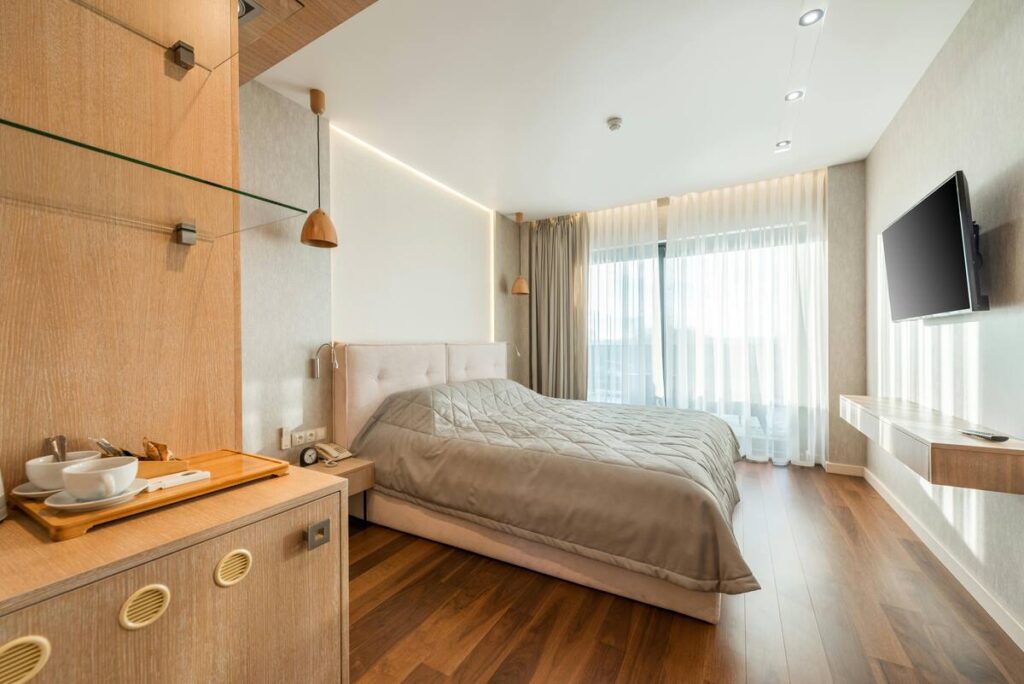
Hotel automation: how to start without getting lost
Many hoteliers know they need to modernize operations, but that does not mean they know where to begin. The idea sounds simple enough: automate repetitive tasks, save time, reduce errors, and improve the guest experience. In practice, it often feels much more confusing.
Should you start with online check-in? Guest messaging? Payments? AI? Kiosks? A unified inbox? Everything can sound urgent, and that is exactly why many hotel managers stay stuck. They know manual work is slowing the team down, but they do not want to invest in technology that adds complexity instead of solving real problems.
That is where a practical approach matters. Hotel automation should not begin with the most advanced tool or the biggest transformation. It should begin with the parts of your operation that create the most friction every day. When you focus on those first, automation becomes much easier to understand, implement, and scale.
This guide is designed for hotel managers who feel lost in the topic and want a clearer path forward. The goal is not to automate everything at once. The goal is to make operations more efficient, step by step, without losing control of the guest experience.
What hotel automation really means
Hotel automation is the use of technology to reduce manual work, standardize recurring processes, and help the hotel operate more efficiently. It is not about replacing hospitality. It is about removing repetitive tasks so the team can spend more time on service, supervision, and higher-value work.
In a hotel, automation can apply to many different areas:
- guest arrival and departure,
- data collection,
- identity verification,
- guest communication,
- payment flows,
- digital documents,
- upselling,
- internal coordination,
- and reporting.
The important point is this: hotel automation is not valuable because it sounds modern. It is valuable because it helps the operation run with less friction.
Why many hotels struggle to get started
One of the biggest barriers is not lack of interest. It is lack of clarity. Many hotels hesitate because the category feels too broad and too technical.
Too many options at once
There are many tools in the market, and they often overlap. Without a clear priority, it is easy to feel overwhelmed.
Fear of making operations more complex
A lot of managers worry that adding technology will create more training needs, more problems, and more dependency on systems.
Uncertainty about ROI
It is not always obvious which process will bring the strongest return. That makes decision-making slower.
Limited time to redesign workflows
Hotel teams are busy. Even when managers know something needs to improve, they often do not have time to rethink the operation from scratch.
This is why the best starting point is not a software comparison. It is an operational question: where is your team losing the most time today?
Hotel automation: what to automate first
The fastest way to make hotel automation useful is to prioritize high-friction, high-volume processes. These are the areas where the team repeats the same work every day and where guests feel delays most clearly.
1. Start with the guest arrival journey
For most hotels, the arrival process is the best place to begin. It is one of the busiest moments in the guest journey, and it often includes several manual steps at once: collecting guest details, checking documents, handling signatures, managing payments, sharing instructions, and answering the same questions repeatedly.
What can be automated here
- online check-in before arrival,
- digital collection of guest data,
- digital signatures,
- identity verification,
- payment requests before check-in,
- pre-arrival communication.
Why this matters
When guests complete part of the process before they arrive, the front desk becomes less congested. The team has better visibility in advance, and the check-in experience becomes faster and more organized.
This is also where solutions like Chekin can fit naturally into operations. Features such as online check-in before arrival, digital signatures, digital payments, OCR document scanning, and identity verification can help hotels simplify one of the most operationally sensitive parts of the guest journey.
2. Automate repetitive guest questions
A significant part of hotel workload comes from answering the same questions every day. Guests ask about check-in times, parking, Wi-Fi, breakfast, access instructions, late check-out, and property rules. None of these questions are unusual, but when they arrive across multiple channels, they consume a lot of staff time.
A better way to handle this
Hotels can automate part of this communication by using structured guest information, digital guidebooks, and AI-supported messaging.
What this improves
- faster response times,
- fewer interruptions for the team,
- more consistent answers,
- better guest clarity before and during the stay.
If the messaging system is connected to property documents and guest guides, the experience becomes much more useful. Instead of generic automation, the hotel can provide answers based on actual property information. This is where a unified inbox powered by AI can make a practical difference, especially when it pulls from real hotel content rather than relying on generic templates.
3. Centralize information before adding more tools
A common mistake is to automate too many steps without first organizing information. Guest details in one system, payment status in another, messages across several channels, and property instructions stored in scattered documents create confusion, even when the hotel has already invested in technology.
What centralization helps solve
- duplicated work,
- inconsistent guest communication,
- incomplete data,
- slower issue resolution,
- and extra time spent searching for information.
Hotel automation works better when the team can operate from a connected flow rather than a patchwork of tools. In many cases, efficiency comes not from adding more systems, but from connecting the right ones.
4. Use automation to reduce manual admin work
Many hoteliers think first about guest-facing automation, but back-office and operational admin also create a lot of inefficiency. Manual document handling, payment follow-ups, repetitive coordination, and fragmented communication all create hidden workload.
Examples of useful automation here
- scheduled payment reminders,
- digital document workflows,
- standardized communication flows,
- task routing based on guest status,
- automated pre-arrival and post-stay messages.
These improvements may seem small individually, but together they reduce operational noise and help teams work in a more predictable way.
5. Add upselling only after the basics are working
Automation can also support revenue growth, but only when the operational foundations are already in place. If the arrival flow is chaotic or communication is fragmented, adding upselling too early can feel forced.
When it makes sense
Once check-in, messaging, and payments are working more smoothly, hotels can introduce offers such as:
- late check-out,
- room upgrades,
- breakfast,
- parking,
- extra services,
- local experiences.
The best moment to present these options is usually during natural touchpoints in the guest journey, especially before arrival or during digital check-in. When done well, this does not feel overly commercial. It feels convenient.
This is another area where guest guides and digital journeys can support hotel operations. They do not only reduce confusion. They can also create a more structured opportunity to present useful add-ons.
How to implement hotel automation step by step
Review your daily pain points
Before choosing technology, identify what slows the hotel down the most. Look at where delays, repeated questions, bottlenecks, and manual tasks appear every day.
Choose one operational priority
Do not start with everything. Pick one area with visible friction and high daily impact. For many hotels, that is guest arrival. For others, it may be guest communication or payment collection.
Map the current workflow
Understand how the process works today before trying to automate it. If the process is unclear manually, digitizing it will not fix the confusion.
Introduce automation in phases
Start small, test, measure, and improve. Hotels usually get better results when they introduce one connected layer at a time rather than trying to transform the whole operation in one go.
Measure what changes
Track practical indicators such as:
- check-in time,
- number of repetitive guest questions,
- share of payments completed before arrival,
- volume of manual admin work,
- operational incidents,
- and staff time saved.
These measurements help show whether the change is truly improving efficiency.
Conclusion
Hotel automation does not have to begin with a massive digital overhaul. For most hotels, the best path is much simpler: identify the most repetitive operational pain points, automate the parts that create the most friction, and build from there.
Guest arrival, repetitive communication, digital payments, document workflows, and centralized messaging are usually the best places to start. Once those foundations are in place, the hotel can expand automation more confidently and with better results.
In that process, solutions like Chekin can be incorporated naturally as part of a broader operational strategy. Online check-in before arrival, OCR scanning, digital payments, digital signatures, AI-powered guest communication, and structured upselling flows can all support a smoother and more efficient hotel journey.
The real value of hotel automation is not doing more with more tools. It is doing the right things with less manual effort, less friction, and better control.
Discover how Chekin can help you automate check-in, stay compliant, protect your property, and boost revenue—saving 87% of your time and earning more from every booking.
Free trial for 14 days. No credit card required!
You may also be interested in:
Hotel Online Reputation Management for a Competitive Edge
Measuring guest satisfaction: the hotel playbook for better reviews