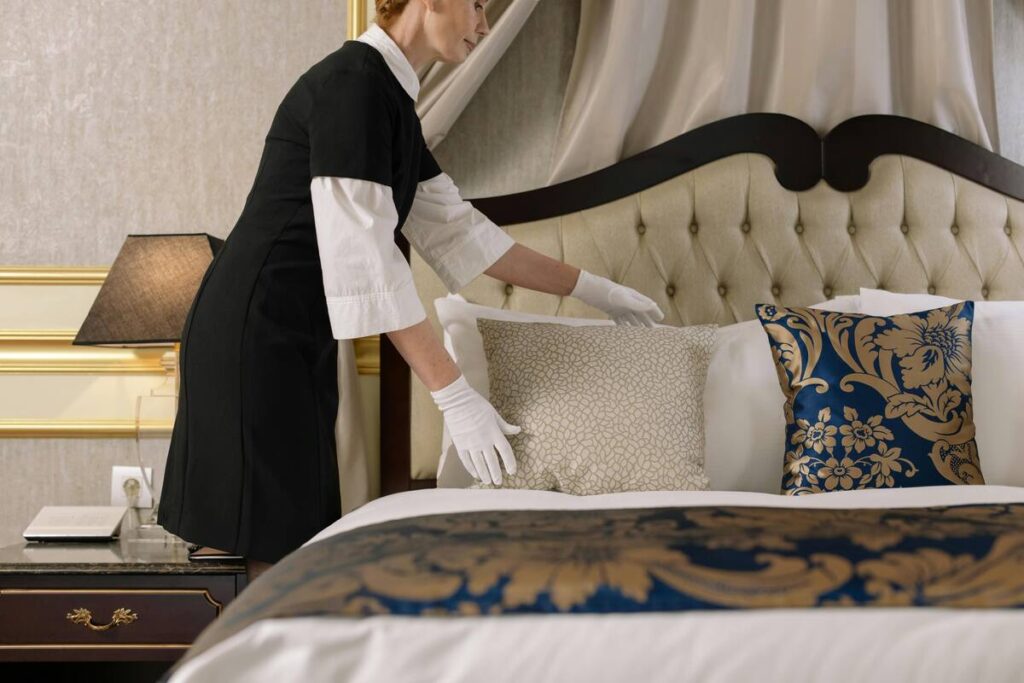
Hotel room layout: a practical guide for hoteliers
A great hotel room layout is more than “where the bed goes.” It’s the invisible system that shapes how guests feel the moment they walk in: whether the room feels spacious or cramped, intuitive or confusing, premium or basic. It also affects your operation—cleaning speed, maintenance access, and the ability to standardise rooms across floors and property types.
This guide breaks down how to design, audit, and manage your hotel room layout with strategies that improve guest experience and make daily operations easier.
Hotel room layout: what it is and why it matters
A hotel room layout is the arrangement of space, furniture, fixtures, and amenities inside a room—bed placement, circulation paths, bathroom access, storage, work area, seating, lighting, outlets, and more. The goal is to maximise comfort and function while keeping the room easy to service.
Why it matters for hoteliers:
- Guest perception: layout drives “first impression” and teaches guests how to use the room.
- Review impact: poor flow, low lighting, awkward bathroom access, or lack of storage are common complaint triggers.
- Operational efficiency: consistent layouts reduce housekeeping time and training complexity.
- Revenue opportunities: clear room “tiers” (standard vs premium vs suite) are easier to sell when the differences are obvious.
The 5 building blocks of a high-performing hotel room layout
1) Zoning: define how the room will be used
Before choosing furniture, map the room into zones:
- Sleep zone: bed, nightstands, reading lights, blackout.
- Work/vanity zone: desk or multipurpose table, mirror, task lighting.
- Storage zone: wardrobe, luggage rack/bench, safe, hooks.
- Refresh zone: minibar/coffee, water, bins.
- Bathroom zone: privacy, ventilation, counter space, towel placement.
A strong layout makes zones feel natural without creating dead space.
2) Flow: remove friction from the guest journey inside the room
Think in “paths”:
- Entry → bed
- Bed → bathroom (especially at night)
- Entry → wardrobe/luggage
- Desk → outlets
- Shower → towel placement
If guests have to squeeze around corners, step over luggage, or open doors into each other, the layout is fighting them.
3) Bed placement: anchor the room with the main value driver
For most guests, the bed is the product. Ensure:
- Clear access on both sides (when possible)
- Nightstands within reach
- Reading lights, outlets/USB near the headboard
- A visually calm “hero wall” (guests notice this in photos)
4) Light + power: make comfort easy, not a puzzle
A room can look beautiful and still fail if it’s poorly lit or short on outlets. Prioritise:
- Layered lighting (ambient + task + bedside)
- Switches that make sense from entry and bedside
- Plenty of outlets where people actually use devices
5) Serviceability: design for housekeeping and maintenance
Hoteliers often underestimate how layout affects labour. Ask:
- Can housekeeping access bins, linens, and surfaces quickly?
- Are high-touch areas easy to clean?
- Can maintenance reach HVAC, lighting, and plumbing without moving heavy furniture?
Room types and layout strategies that work
Standard rooms: win with simplicity and consistency
Standard rooms should be repeatable. Strategies:
- Use a modular furniture plan that fits multiple room footprints
- Keep a predictable placement for essentials (desk, coffee, luggage rack)
- Avoid overfurnishing—space reads as “quality”
Studios and long-stay rooms: add function without clutter
If you target extended stays:
- Create a clear “living/work” zone separate from the sleep zone
- Add a dining/work surface that’s genuinely usable
- Increase storage and hooks (guests unpack)
Suites: make the upgrade obvious
For suites, the layout should communicate “more” instantly:
- Separate sleeping and living areas (even partial separation helps)
- A real seating area with a table that supports room service
- A bathroom experience that feels premium (space, light, counter area)
Connecting/adjoining rooms: design for families and groups
If you sell family travel:
- Ensure doors don’t block circulation
- Add storage and luggage space near entry
- Provide a clear noise-control strategy (door seals, layout buffers)
Read more about: Tech in hotels: a practical guide for modern hoteliers
How to manage hotel room layout across multiple rooms (operations playbook)
Create a “layout standard” for each category
For every room category, document:
- Furniture list (exact items + alternatives)
- Placement rules (bed position, desk zone, luggage bench location)
- Minimum clearances (walkways, door swings)
- Lighting and outlet requirements
- Photo angles that sell the room accurately
This becomes your internal standard to reduce variability and guest surprises.
Audit your layout with real guest behavior
Do a quarterly walk-through like a guest:
- Enter with a suitcase
- Charge a phone at night
- Use the bathroom with lights off
- Work at the desk for 30 minutes
- Try storing two carry-ons + coats
You’ll uncover friction that never shows up on a floor plan.
Reduce guest questions with digital guidance (without adding workload)
Even the best layout can generate questions: where to park luggage, how to access smart TV, where to find amenities, how to use climate controls.
This is where Chekin supports operations: you can deliver automated pre-arrival and in-stay messages with room instructions, Wi-Fi, property rules, and self-service help—reducing repetitive front-desk requests and improving the perceived smoothness of the stay. You keep the room experience consistent, even when layouts vary slightly across floors.
More about: Pre-arrival in hotel: the 5-star first impression playbook
Align layout with self-service and faster arrivals
Modern guests value speed. When your hotel room layout is paired with a digital arrival flow (online check-in, clear access instructions, automated identity verification steps where required), you reduce front-desk peaks and create a calmer first impression—especially in high-turnover properties.
Common hotel room layout mistakes (and quick fixes)
- No place for luggage: Add a bench or rack near entry; guests hate putting bags on the bed.
- Outlets in the wrong place: Install bedside USB/power where devices naturally sit.
- Bathroom bottlenecks: Improve towel placement, add hooks, ensure door swing doesn’t block circulation.
- Cluttered furniture plan: Remove one “nice-to-have” item to gain perceived space.
- Confusing controls: Provide a simple digital “how-to” guide via automated messaging.
Conclusion: design for guests, run it like a system
A strong hotel room layout improves reviews, reduces friction, and makes your operation faster. The key is to treat layout as a repeatable system: zoning, flow, lighting/power, and serviceability—then standardise it by room category and support it with clear digital guidance.
When your layouts are consistent and your guest communication is automated, your team spends less time answering the same questions and more time delivering hospitality. Chekin helps hoteliers keep that experience consistent—from arrival messaging to smoother in-stay communication—so the room layout you designed performs in the real world, every day.
Discover how Chekin can help you automate check-in, stay compliant, protect your property, and boost revenue—saving 87% of your time and earning more from every booking.
Free trial for 14 days. No credit card required!
You may also be interested in: Hotel payment tools: what they are and why hotels need them