Hotel Upsell: The Complete Guide to Earning More Per Guest
Every hotel has revenue sitting uncaptured. Guests arrive willing to spend more than their room rate, but no one asks at the right moment, in the right way.
This guide covers what hotel upselling is, why it works, when to offer it, the best examples that actually convert, and how to automate the entire process so it happens without your team having to think about it.
What is hotel upselling?
Hotel upselling is the practice of offering guests an upgrade or enhanced version of what they have already booked, at an additional cost. The goal is to increase the revenue generated per guest while also improving their experience.
The most common example of upselling in hotel is a room upgrade: a guest books a standard room and, before or at check-in, is offered a superior room for an additional nightly fee. But hotel upsell opportunities go well beyond room upgrades. Early check-in, late checkout, spa access, airport transfers, welcome amenity packages, and curated local experiences are all forms of upselling that generate real revenue.
Hotel upselling is different from cross-selling, which involves offering additional services unrelated to the original booking (a restaurant reservation, a tour, a parking spot). Both matter for revenue, but upselling focuses specifically on enhancing what the guest has already committed to.
Why hotel upselling works
The psychology behind hotel upselling is straightforward. A guest who has already made a booking decision is past the hardest part of the sales process. They are committed to staying at your property. Offering them an upgrade at that point is far easier than acquiring a new guest.
Research consistently shows that guests are more likely to spend more per stay when offers are:
- Relevant to their trip (a romantic package for couples, an early check-in for arriving flight passengers)
- Offered at the right moment (pre-arrival emails and the check-in process outperform offers made at booking)
- Framed as an enhancement, not a sales pitch
Hotels that implement structured upsell programmes typically see an increase in revenue per available room (RevPAR) of 10 to 30%, depending on the property type, occupancy levels, and the quality of the offer.
Read more about: Hotel guest types: how to serve and upsell every modern guest
When to offer a hotel upsell
Timing is the most important factor in upsell conversion. The same offer lands very differently depending on when it is made.
Pre-arrival (2 to 5 days before check-in)
This is the highest-converting window for hotel upselling. The guest is in anticipation mode, thinking about the trip, and more receptive to upgrading their experience. A personalised email offering a room upgrade, a welcome package, or a spa credit at this stage converts significantly better than the same offer made at check-in.
The message should feel personal rather than automated, even if it is sent by your system. Reference their arrival date, acknowledge the type of trip if you know it (anniversary, business stay, family holiday), and make the upgrade feel like an obvious enhancement rather than an upsell.
At check-in
The front desk has always been a natural upsell moment. Staff can offer a room upgrade, a late checkout, or a breakfast package as part of the check-in conversation. The limitation is consistency: this depends on individual staff members asking every time, which rarely happens.
Digital check-in changes this. When guests complete check-in online before arrival, upsell offers can be presented as part of the flow, shown to every guest, at the same stage, every time.
During the stay
Mid-stay upselling works for services the guest can use while still there: a spa treatment, a restaurant booking, a room service package, a late checkout. The channel here is typically a messaging platform or in-room tablet rather than an email.
At checkout
Late checkout is the primary upsell at checkout. “Would you like an extra two hours in your room?” is a simple offer that converts well because the guest is already thinking about leaving and the friction of departure is real.
You may also be interested in: Why hotels must offer online check-in
10 examples of upselling in hotel that actually convert
1. Room upgrade
The classic hotel upsell. A guest who has booked a standard room is offered a superior room, suite, or room with a better view for an additional fee per night. The key to conversion is specificity: show them exactly what they are getting and make the price difference feel justified. “Upgrade to our Ocean View Suite for an extra 35 GBP per night” converts better than a generic upgrade offer.
2. Early check-in
Many guests arrive before the standard 3pm check-in time. Offering a guaranteed early check-in (subject to availability) for a flat fee gives them peace of mind and generates incremental revenue from rooms that would otherwise sit empty in the morning.
3. Late checkout
The same logic applies in reverse. A guest catching an evening flight has little reason to vacate at 11am. Late checkout for a flat fee is one of the easiest upsells to offer because the guest already wants it and only needs to be asked.
4. Welcome amenity package
A bottle of wine, a fruit basket, a box of chocolates, fresh flowers. These packages cost the hotel very little to prepare and can be offered at two to five times their cost as a “special arrival package.” Couples celebrating anniversaries and families on holiday are the highest-converting segments for this upsell.
5. Breakfast package
If your hotel does not include breakfast in the base rate, offering it as an upsell at check-in or pre-arrival typically achieves good conversion rates. Guests who are hungry and oriented on arrival are the easiest to convert. An offer in the pre-arrival email is often more effective than at check-in itself.
6. Parking
For hotels in urban locations or near airports, guaranteed parking is a high-value upsell for guests arriving by car. Include the offer in your pre-arrival communication and let guests book it directly. It removes friction for them and adds revenue for you.
7. Airport transfer
Guests arriving from a long-haul flight are in no mood to figure out ground transport. A pre-booked airport transfer offered at the right moment (confirmation email or pre-arrival message) converts reliably, particularly for business travellers and international guests.
8. Spa or wellness credit
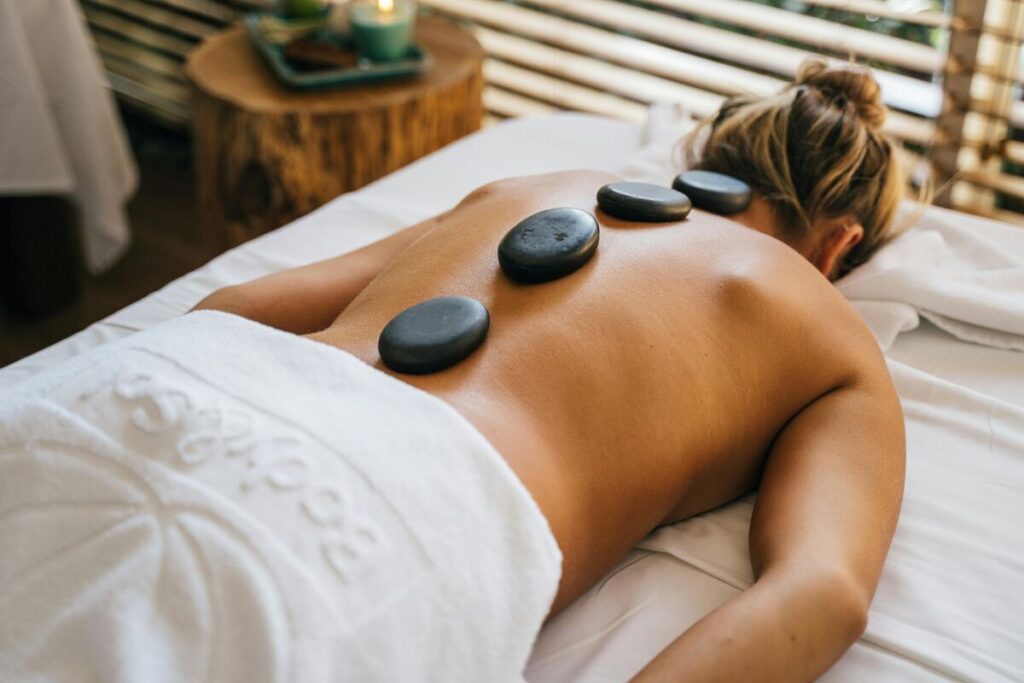
A spa credit or discounted access to wellness facilities is a strong upsell for leisure properties. It works best when offered as part of a curated package (“include 50 GBP spa credit with your stay”) rather than as a standalone add-on, because the framing emphasises the experience rather than the transaction.
9. Minibar or in-room refreshment package
A stocked minibar, a selection of local drinks and snacks, or a curated in-room refreshment package on arrival generates immediate satisfaction for guests and typically sells well when the items feel local or premium rather than generic.
10. Local experiences and activities
This is where hotel upselling extends beyond the room itself. Guests want memorable stays, and many are willing to pay for curated experiences: private city tours, cooking classes, wine tastings, sunset boat trips, surf lessons. The hotel acts as the trusted local guide, and the guest gets a seamless booking experience.
This category of hotel upsell is growing fast. Guests increasingly book hotels not just for accommodation, but because the property can connect them with something they could not find or organise themselves.
Hotel upsell vs. cross-sell: what is the difference?
| Hotel upsell | Hotel cross-sell | |
|---|---|---|
| Definition | Upgrade or enhancement of the existing booking | Additional product or service unrelated to the room |
| Examples | Room upgrade, early check-in, late checkout | Restaurant booking, tour, car hire, activity |
| When to offer | Pre-arrival, check-in, checkout | Any point in the stay |
| Revenue goal | Higher RevPAR per room | Total revenue per guest (TRevPAR) |
| Guest mindset | Enhancing what they have already chosen | Discovering something new |
Both approaches work and reinforce each other. A hotel with a structured approach to both typically generates 15 to 25% more total revenue per guest than one relying purely on room revenue.
How to automate hotel upselling
Most hotel upsell opportunities are missed not because the hotel lacks the offers, but because no one asks at the right moment. Front desk staff are busy. Pre-arrival emails do not get sent. The system does not prompt anyone. The guest leaves without being offered anything.
Automation fixes this by making upselling systematic rather than dependent on individual staff behaviour.
Automated pre-arrival emails
Set up automated pre-arrival emails that trigger 2 to 5 days before check-in, include the upsell offers available at your property, and let guests book or confirm upgrades without having to call the front desk. The email should come from the hotel (not from a generic platform address) and be personalised with the guest’s name and arrival details.
Digital check-in with integrated upsells
When guests complete check-in digitally before arrival, upsell offers can be embedded in the check-in flow. Every guest sees the same offers at the same stage, which removes the inconsistency of relying on front desk staff to ask every time. Conversion rates for upsells presented during digital check-in are typically higher than at the physical front desk, because the guest is already engaged in a process and making choices.
Experiences and activities as part of the guest journey
This is where tools like Chekin Experiences make a practical difference. Chekin allows hotels to offer local experiences and additional services to guests as part of the pre-arrival and check-in flow, directly integrated with the digital check-in process. Guests can browse and book curated activities, welcome packages, and add-ons from the same link they use to complete their check-in documentation, before they arrive.
The result is a guest who arrives already booked into an experience, having paid for it in advance, with no additional admin for the property. No chasing, no front-desk pitch, no missed opportunity.
Mid-stay messaging
Use automated messages during the stay (via SMS, WhatsApp, or email) to offer services the guest can still use: late checkout, spa access, a dinner reservation. Keep the message short, make the offer specific, and include a direct link to book or confirm.
Measuring hotel upsell performance
Track these metrics to understand how your upsell programme is performing:
Revenue per available room (RevPAR): The primary indicator of whether your upselling is moving the needle on overall revenue performance.
Upsell conversion rate: The percentage of guests who accept an upsell offer. Industry benchmarks vary, but a conversion rate of 15 to 25% on pre-arrival room upgrade offers is achievable with the right copy and timing.
Average upsell revenue per guest: Total upsell revenue divided by total guests. This shows how much incremental revenue your programme generates per arrival.
Offer acceptance by type: Track which specific upsells (room upgrade, early check-in, experiences) convert best. This tells you where to focus and what to stop offering.
Review score correlation: Do guests who accept upsells leave better reviews? Usually yes. This is the compounding benefit of upselling: more revenue and better ratings that drive more bookings.
Frequently asked questions about hotel upselling
Hotel upselling is the practice of offering guests an upgrade or enhancement to their existing booking at an additional cost. Common examples include room upgrades, early check-in, late checkout, welcome packages, and local experiences. The goal is to increase revenue per guest while improving the overall stay experience.
The highest-converting window is 2 to 5 days before arrival, when guests are in anticipation mode and most receptive to enhancing their trip. The digital check-in flow is the second most effective moment. At-checkout offers work well specifically for late checkout. Mid-stay messages can convert for services guests can still use.
Upselling offers an upgrade or enhanced version of what the guest has already booked (a better room, more time, a premium amenity). Cross-selling offers something separate and additional (a restaurant booking, a tour, a car hire). Both increase total guest revenue, but upselling specifically targets RevPAR while cross-selling targets total revenue per guest.
Hotels with structured upsell programmes typically see RevPAR increases of 10 to 30%, depending on property type, occupancy, and offer quality. Properties that automate upselling through digital check-in and pre-arrival emails tend to see higher conversion rates than those relying on front-desk staff to ask manually.
Yes. Upselling is not only for large hotel chains. Independent properties often have the advantage of more personalised guest relationships and better knowledge of local experiences, which makes experience-based upselling particularly effective. The key is automating the process so it happens consistently without adding workload to a small team
The most effective approach combines automated pre-arrival emails, a digital check-in platform that integrates upsell offers into the guest flow, and mid-stay messaging. Tools that connect upsell offers directly to the check-in process generate higher conversion rates than standalone upsell tools, because guests are already engaged and making decisions at that moment.
The connection between upselling and the guest experience
There is a version of hotel upselling that feels transactional and slightly pushy, and a version that feels like genuine hospitality. Relevance and timing separate the two.
A guest who receives a pre-arrival email offering a romantic dinner package for two, because the reservation notes mention it is an anniversary trip, does not feel sold to. They feel looked after.
A guest who is pitched a room upgrade three times at the front desk after a long flight feels like a revenue target.
The best hotel upsell programmes are built around the guest’s actual journey. What do they need before they arrive? What will make their first night better? What local experience would make this trip memorable rather than ordinary?
That is where Chekin Experiences fits into a broader guest experience strategy. Beyond automating the compliance and documentation side of check-in, Chekin lets hotels present curated local experiences and add-ons at the moment guests are most engaged: when they are completing their check-in details and already thinking about the stay ahead. The offer feels like part of the welcome, not an afterthought.
Try Chekin free for 14 days. No credit card required.
Conclusion
Hotel upselling is one of the most accessible ways to increase revenue from the guests you already have. No additional marketing spend, no new rooms, no extra headcount.
The hotels that consistently capture that revenue have one thing in common: they ask. Every time, at the right moment, through a system that makes it automatic. That is the difference between an upsell programme that works and one that exists only on a slide deck.